
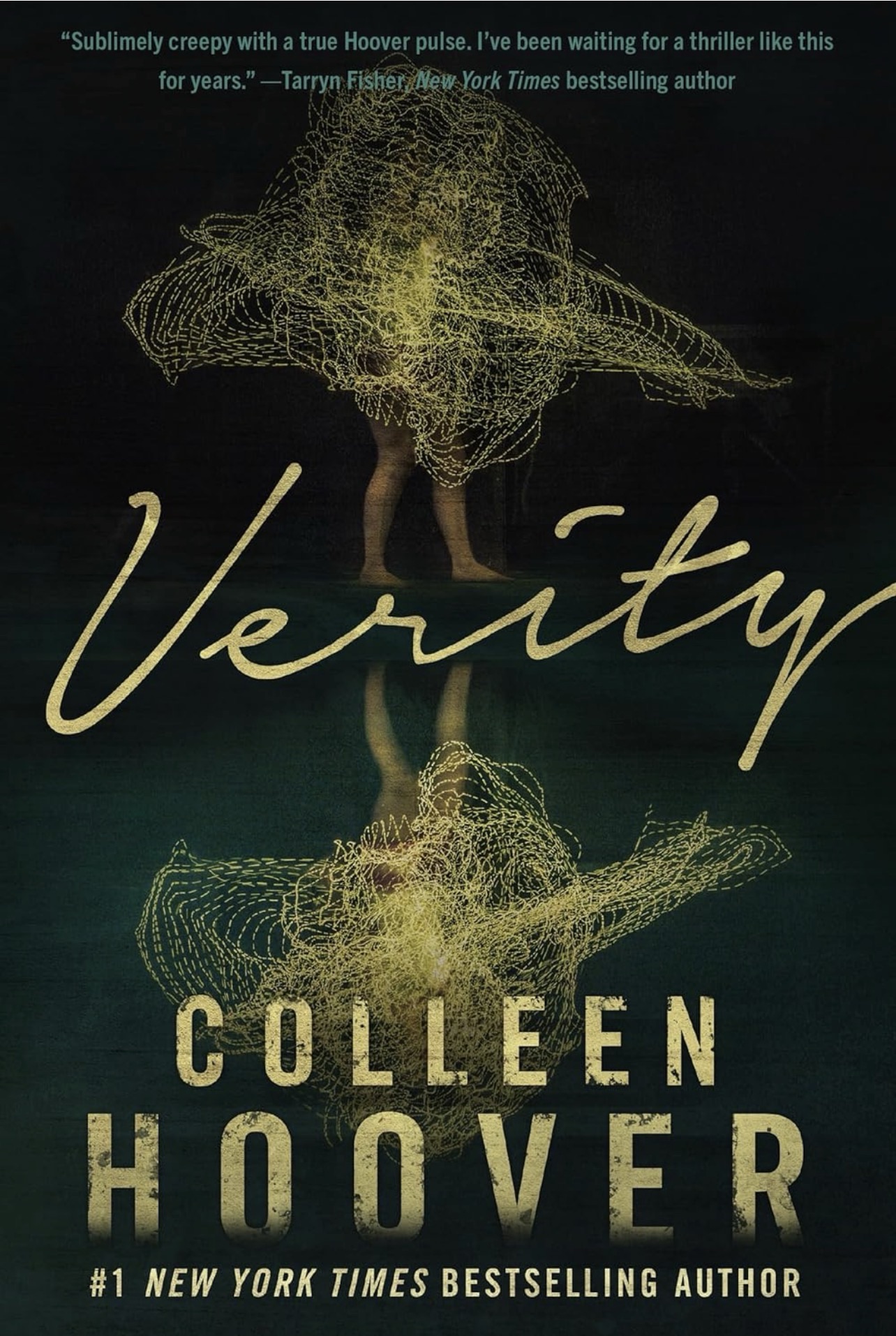
I went into Verity completely blind.
First Colleen Hoover book. No expectations. No real sense of what I was about to walk into. Within a few chapters, I had that very specific thought: I don’t think I like this… but I also don’t think I can stop reading it.
There were moments I genuinely wanted to put it down. Not in a casual way, in that physical, almost instinctive way where something feels too dark, too intrusive. Like you’ve crossed into a space you weren’t meant to see and then I kept going anyway. Because the tension isn’t built on enjoyment, it’s built on need. You need to know what’s true. You need to know how far it goes. You need to know how it ends.
That’s the first thing I clocked as a writer.
This book doesn’t pull you in because it’s beautiful or layered in a literary way. It pulls you in because Hoover controls what you know, and more importantly, what she withholds, at a very precise level. You’re constantly being given just enough to form an opinion, and then that opinion gets destabilized before you can settle into it.

It’s a cycle of discovery and doubt, over and over again, and it’s incredibly effective. And then there’s the manuscript. That’s where the book shifts from being gripping to being uncomfortable.
Not just because of what’s in it, but because of how it makes you feel for reading it. There’s something about it that feels private, like you’ve found something you weren’t supposed to. It’s not just what happens next, it’s should I even be here for this? That’s a different kind of tension. And once you’re in it, you’re in it. By the time you get to the end, the book does something I wasn’t expecting. It doesn’t resolve, it splits.
You’re left choosing between two versions of the truth. Either the manuscript is real, and everything you read was a direct window into who Verity actually is, or the manuscript is a construction, and the letter reframes everything you thought you understood. The unsettling part isn’t just that both are possible.
It’s that you have to choose.
The best part of the book, which is the real twist, isn’t the letter or the manuscript. It’s the moment you realize your answer reveals what you trust more, confession or control. That was the part that stayed with me. Not the shock. Not even the ending itself. But the realization that my instinct was to believe one version over the other, and that instinct came from somewhere.

Because when you strip it back, you’re not just deciding what happened in a story. You’re deciding, do you believe people reveal their truth when they confess something dark? Or do you believe people are capable of constructing something convincing enough to control how they’re seen?
That’s a much more interesting question than “what really happened.”
It’s why the book lingers. I don’t think Verity is subtle. It’s not trying to be. It pushes into territory that will absolutely divide readers, emotionally, morally, and structurally. There are parts that feel excessive. Parts that feel like they go further than they need to. But at the same time, I read it quickly. I didn’t put it down. And when it ended, I didn’t feel resolved; I felt unsettled. Which, for a thriller, is kind of the point. So here’s the real question:
Are you Team Manuscript or Team Letter?

Because once you answer it, you realize, you’re not just interpreting the story. You’re revealing how you interpret people. I’m still leaning toward Team Letter, and the more I think about why, the more it actually kind of bothers me.
Which team did you end up on?
You must be logged in to post a comment.